Forget the Movie — The Making Of Is the Main Event Now
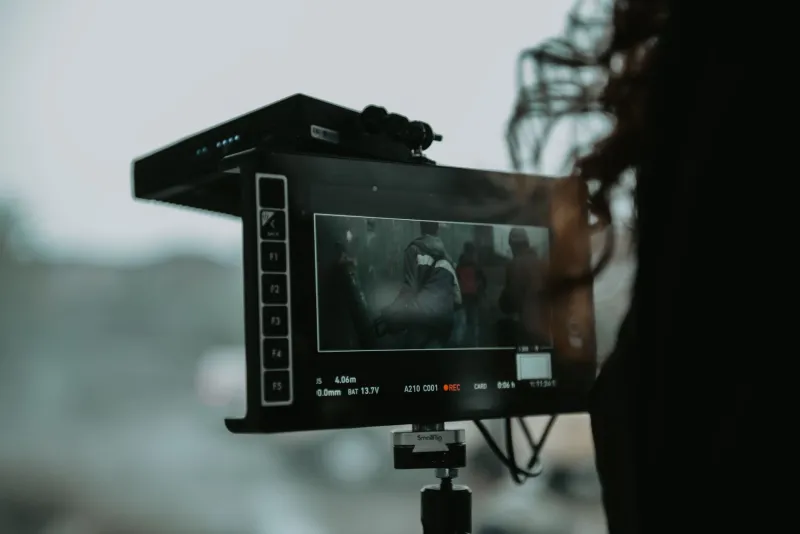
There is a very specific kind of content that lives rent-free in your brain right now. It is not a movie. It is not a TV episode. It is a thirty-seven-second vertical video of a director adjusting a camera lens while someone off-screen laughs about craft services. You watched it four times. You sent it to a friend. You said, "I cannot WAIT for this." And then — here's the twist — the actual film came out, you watched it once, and you felt approximately nothing.
Welcome to the golden age of the making-of. Population: all of us, apparently.
The Accidental Genre Nobody Asked For (But Everyone Loves)
Behind-the-scenes content has technically existed since Hollywood figured out that audiences were curious about the machinery behind the magic. Old-school EPKs — that's "electronic press kits" for the uninitiated — were sterile, corporate-approved packages designed to get thirty seconds of B-roll onto local news segments. They were not entertainment. They were brochures with better lighting.
What's happening now is something completely different, and it crept up on everyone, including the people making it. Somewhere around the mid-2010s, creators started posting casually to Instagram and Snapchat from set. Then YouTube channels started doing "day in the life" production vlogs. Then TikTok arrived and basically turned every film set into a reality show that nobody had greenlit but everybody was watching.
The result is a whole new content ecosystem where the finished product is almost beside the point. The journey is the destination. The placeholder has become the product.
Why Your Brain Likes the BTS Better Than the Thing Itself
Here is an uncomfortable psychological truth: anticipation feels better than arrival. This is not a hot take — it is a documented phenomenon. The dopamine hit from expecting a reward is measurably stronger than the one from receiving it. Hollywood has accidentally hacked this, and they did not even mean to.
When you watch a behind-the-scenes clip, your brain is doing something remarkable. It is filling in blanks. It is constructing a version of the finished film that is perfectly tailored to your own tastes and expectations. The BTS clip is a prompt, and your imagination is doing the heavy lifting. The actual movie, when it arrives, has to compete with the version you already built in your head — and it almost never wins.
This is, incidentally, exactly why NoWebsiteYet exists. Something's coming. Just not yet. And the "just not yet" part? That's where the magic lives.
The Creators Who Figured It Out (Accidentally)
Peter Jackson practically invented the modern making-of with his exhaustive production diaries for the Lord of the Rings extended editions, but those were retrospective. The real shift happened when creators started broadcasting the process in real time, before anyone knew if the finished thing was even going to be good.
Consider the phenomenon around certain prestige TV productions where set photos leak, showrunners post cryptic Instagram captions, and cast members share workout videos with suspiciously thematic music. Each of these is technically promotional content. But the audience isn't consuming it as advertising. They're consuming it as episodes. The production of the show has become a parallel show, running simultaneously, with its own narrative arc, its own dramatic beats, and its own fandom.
Some creators have leaned into this so hard that the making-of content has a larger audience than the finished work. Documentary filmmaker-adjacent YouTube channels have built entire subscriber bases on the promise of a project that has been "in production" for years. The audience doesn't leave. They stay, because the process is genuinely compelling — and because leaving would mean admitting the thing might never arrive.
The Streaming Era Made This Inevitable
Streaming didn't just change how we watch content. It changed our relationship with content as a concept. When everything is available all the time, the scarcity that used to make releases feel like events evaporated. What replaced it? The artificial scarcity of the development process itself.
You can't stream a movie that hasn't been made yet. You can't binge a show that's still in the writers' room. But you can watch a producer's Instagram story from the location scout. You can spend forty-five minutes on Reddit analyzing a prop that appeared in a set photo. You can, and you will, and you'll call it "doing research."
The streaming platforms have noticed. Disney+ didn't accidentally commission those making-of docuseries for their Marvel properties. They knew exactly what they were doing: they were selling the anticipation as a product, packaging the "coming soon" as a standalone experience. The fact that the actual shows were sometimes a little underwhelming was almost irrelevant, because by the time they dropped, audiences had already had a whole separate emotional journey getting there.
The Dark Side of Living in the Trailer
None of this is entirely without consequence, and it would be irresponsible not to mention the weird feedback loop it creates. When behind-the-scenes content becomes the main event, creators start producing BTS content for its engagement value rather than as a byproduct of genuine production. You get making-ofs of things that don't exist yet. You get "development updates" for projects that are essentially vibes in a trench coat. You get creators who have mastered the art of seeming like they're making something without the uncomfortable burden of actually finishing it.
This is, and we say this with full affection, extremely on-brand for our current cultural moment. We have collectively decided that the placeholder is acceptable entertainment. That the domain name parked on a server somewhere, promising something incredible is coming, is itself a satisfying destination. NoWebsiteYet dot com, baby. We built the whole brand on this energy.
The question worth asking is whether this is a feature or a bug. Is it genuinely delightful that the process has become the product? Or have we all just gotten very comfortable with never arriving?
The Answer, Probably
Both. Obviously both.
There's something genuinely wonderful about a culture that finds joy in the in-between spaces, that can extract entertainment from a director's handwritten notes or a cast's chemistry off-camera. It speaks to an appetite for authenticity that the polished, algorithmed final product often can't satisfy. The making-of is messier, more human, and frequently more honest than the thing it's supposedly advertising.
But it's also true that we've gotten dangerously good at substituting anticipation for experience, at treating the loading screen as the game. At some point, the website has to actually launch. The movie has to come out. The show has to air. The thing has to become a thing, or all that beautiful behind-the-scenes content collapses into a very elaborate announcement that nothing was ever real.
Until then, though? Pass us another set photo. We're watching.