Imaginary Blockbusters Hit Different: The Movies in Our Heads Are Always Better
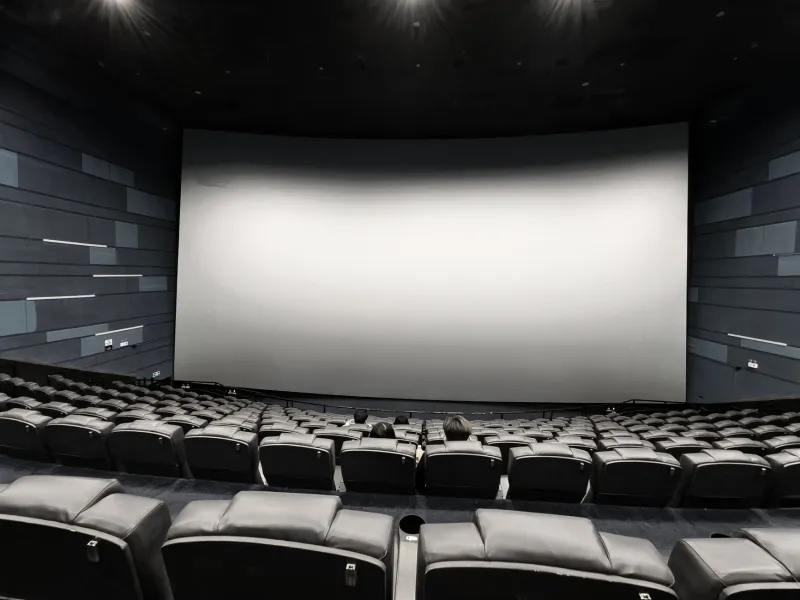
Something's coming. Just not yet. And honestly? That might be the whole point.
There's a very specific kind of entertainment fan — you probably know one, or are one — who can talk for forty-five uninterrupted minutes about a movie that does not technically exist. They've mapped the plot. They've cast the leads. They have opinions about the cinematographer who should be attached. They've written a Reddit post that got 12,000 upvotes explaining why the third act needs to pay off a detail from the first film, which, again, has not been made.
This is not a fringe behavior. This is the internet's primary hobby.
The Unfinished Always Wins
Here's a question nobody asks enough: why does the imaginary version of a thing so frequently feel more satisfying than the real version?
Consider the trajectory of any beloved franchise that ends without a proper conclusion. Within weeks — sometimes days — fan communities have already built the sequel in their heads. They've written the Reddit threads. They've made the YouTube video essays. They've argued in Discord servers about character arcs that will never be filmed. And here's the uncomfortable truth: a lot of that content is genuinely more engaging than mid-tier actually-released entertainment.
The canceled HBO series you never got to see the ending of? You've probably thought about it more than you've thought about three shows that actually finished their runs. The Zack Snyder project that exists in rumor form only? More column inches have been written about it than some Oscar winners. The sequel that's been "in active development" since the Obama administration? Still trending on Twitter — sorry, X — every six months when someone sneezes near a production company.
The void is doing something. We just haven't fully admitted what.
Your Brain on Anticipation
Psychologists have a name for this — well, several names, depending on which study you're citing — but the short version is that human brains are wired to find anticipation genuinely pleasurable. Dopamine doesn't wait for the reward to arrive. It fires in advance, during the buildup, the wondering, the not-yet.
Hollywood figured this out decades ago, which is why the trailer-for-a-trailer became a thing that exists. But social media turbocharged it into something nobody fully planned for. Now the speculation cycle — rumor, denial, re-rumor, casting leak, denial of casting leak, grainy set photo, denial of grainy set photo — has become its own entertainment product, running parallel to (and sometimes longer than) the actual production.
A movie takes two years to make. The discourse about whether that movie will be good takes five. By the time the film drops, you've already emotionally processed seventeen different versions of it. The real one almost can't compete.
The Fan Theory Industrial Complex
There's an entire content economy built on this phenomenon, and it's enormous. YouTube channels with hundreds of thousands of subscribers exist specifically to analyze projects that are not finished, not greenlit, or not even officially announced. They break down "leaked" plot details. They compare casting rumors. They explain why the studio has to make this sequel or risk leaving money on the table.
The comment sections on these videos are doing something interesting: they're not just passive consumption. They're collaborative world-building. Fans are essentially writing the unmade thing together, in public, in real time. It's improv storytelling with a massive ensemble cast and no stage.
And before you dismiss this as sad or parasocial or whatever dismissive word is currently in rotation — consider that this is exactly what fan fiction has always been, just faster and louder and with better graphic design on the thumbnail.
'What Could Have Been' as a Genre
At some point, the hypothetical became its own genre. "What could have been" is now a legitimate entertainment category, complete with its own format conventions.
You've got the video essay: usually 45 minutes, dramatic music, lots of archival footage, a narrator who sounds personally wounded by the studio's decisions. You've got the oral history piece: interviews with people adjacent to the project who are legally limited in what they can say but extremely good at implying things. You've got the fan restoration project: someone spending three years assembling deleted scenes and alternate cuts of a movie that the studio considers finished.
All of this is enormously popular. More popular, sometimes, than content about things that actually came out.
The canceled Deadpool animated series that Fox killed before it aired? People are still upset about it in a way that feels genuinely fresh. The original cut of a 1990s blockbuster that the director has described in interviews but that no one has seen? There are active communities dedicated to finding it. The sequel to a beloved film that the lead actor has said he'd make "if the script is right" — a script that does not currently exist — has inspired more passionate online debate than most actual sequels.
The NoWebsiteYet Condition
This website — the one you're reading right now, which we remind you is still very much a work in progress, much like the projects we're discussing — understands this energy intimately. Something's coming. Just not yet. And in the meantime, the imagination fills the gap with something that might be better than whatever eventually arrives.
That's not cynicism. That's actually kind of beautiful, in a weird, parasocial, please-just-let-us-have-the-sequel way.
The movies that don't exist yet haven't disappointed anyone. They haven't had a third act problem. They haven't cast someone the internet decided it didn't like. They haven't had a runtime that's twenty minutes too long or a villain who's underdeveloped or a post-credits scene that raises more questions than it answers. They are, in the imagination, perfect. And perfection is a very comfortable place to live.
The Catch, Obviously
Here's where it gets complicated: sometimes the thing actually gets made. And then the imaginary version — the one that lived rent-free in collective fan consciousness for four years — has to share space with the real one.
This almost never goes smoothly.
The real version is always, by definition, a version. One interpretation. One set of choices. The imaginary version was simultaneously every version, including yours, including the one that would have been exactly what you wanted. The moment the film exists, it collapses from infinite possibility into a single, finite, reviewable, criticizable object.
No wonder people sometimes prefer the waiting.
So the next time you find yourself spending an hour reading about a movie that doesn't have a release date, a script, or a confirmed director — don't be embarrassed. You're not wasting time. You're participating in one of the internet's most genuinely human activities: building something in the shared imagination, together, in the hopeful space between announced and actual.
Something's coming. Just not yet. And for now, that's enough.