Nobody Ordered This: The Glorious Absurdity of Franchises That Just Won't Take the Hint
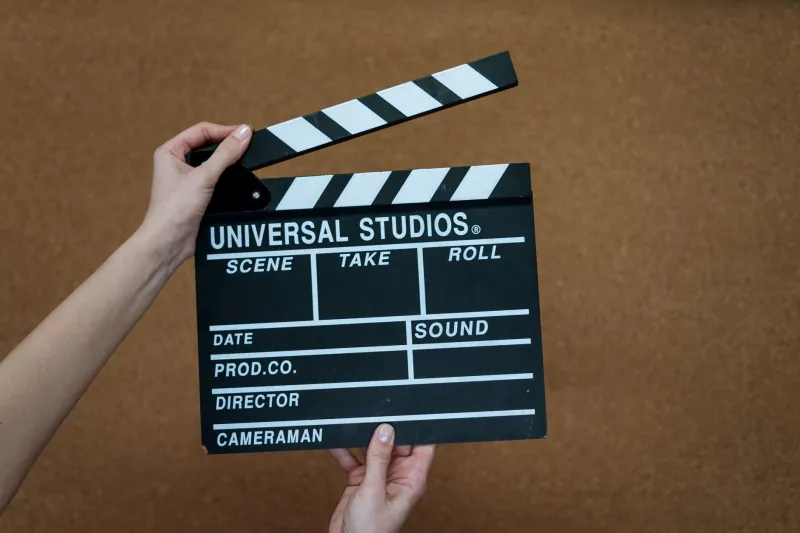
There is a particular kind of confidence that only a Hollywood studio executive can possess. It is the confidence of someone who looks at a franchise that last mattered during the Obama administration, squints very hard, and says, "You know what this needs? A cinematic universe."
This is not a new phenomenon. But lately, it has reached a kind of philosophical purity — a form so refined that it almost deserves academic study. Studios are no longer just making sequels to movies people liked. They are making sequels to sequels of movies people tolerated, spinning off characters nobody remembers, and announcing "expanded universe" strategies for properties that could not fill a mid-size AMC on a Tuesday afternoon.
And yet, the press releases keep coming. Confident. Glossy. Completely divorced from the observable universe.
The Announcement Is the Product Now
Here is the thing about a Hollywood franchise announcement: it does not actually require a finished movie. It does not require a script, a director, or in several notable cases, a coherent premise. What it requires is a press release, a release date that is far enough away to feel plausible, and a brand name that someone, somewhere, once recognized.
The announcement itself has become the unit of value. Studios announce sequels to generate headlines. Headlines generate social media chatter. Social media chatter is then cited as evidence of "audience demand." Audience demand justifies the sequel that was already being made before anyone asked for it. It is a closed loop of manufactured enthusiasm, and it is chef's kiss efficient.
You have seen this play out in real time. A studio announces a sequel to something you vaguely remember watching on a plane in 2014. Twitter briefly surfaces a handful of nostalgic tweets. A trade publication writes "Fans React to [Title] Sequel Announcement." The fans in question are largely just people expressing surprise that the first one existed. None of this stops the sequel. Nothing stops the sequel.
Franchise Fatigue Is Real, and Studios Are Confused by It
At some point in the last decade, audiences started exhibiting a strange behavior that completely baffled the industry: they stopped showing up for movies they did not actually want to see. Revolutionary stuff.
The term "franchise fatigue" entered the discourse, and studios responded to it in the most Hollywood way imaginable — by announcing more franchises. The diagnosis was correct. The treatment was a second dose of the illness.
Consider the extended universe model, which worked spectacularly for Marvel and has since been attempted by approximately everyone else with results ranging from "disappointing" to "a cautionary tale taught in film school." The lesson Hollywood absorbed from Marvel's success was not "build something audiences genuinely love over years of careful storytelling." The lesson was "make a lot of movies with the same characters in them." These are related concepts in the same way that a bicycle and a fighter jet are both technically vehicles.
The result is a landscape littered with announced cinematic universes that never made it past the first installment, spinoff series greenlit before the original film had finished its opening weekend, and sequels to movies that lost money — because the brand still has "value" even if the audience has moved on.
The Properties That Time Forgot (And Hollywood Did Not)
Let's take a moment to appreciate the specific genre of franchise resurrection that targets properties from the late '90s and early 2000s — an era that Hollywood has decided is now sufficiently vintage to mine for nostalgia, whether or not the nostalgia is actually there.
Somewhere right now, a studio is in early development on something you watched as a kid that you have not thought about since. They have hired a writer. They have a "fresh take" that "honors the original while bringing it to a new generation." They have a release date in 2027. They are very excited about this.
You are not excited about this. You might be mildly curious for approximately forty-eight hours when the announcement drops, in the same way you are briefly curious when you find an old receipt in a jacket pocket. That is not the same as wanting to buy a ticket.
The gap between studio enthusiasm and audience interest is one of the great chasms of modern entertainment. Studios measure interest in impressions, search volume, and the number of times a title trends. Audiences measure interest in whether they actually feel like leaving their house on a Friday night for something they could probably wait to stream. These are different metrics. They produce different conclusions.
What the Spreadsheet Cannot Measure
The uncomfortable truth lurking beneath all of this is that franchise math looks very clean on a spreadsheet and very messy in a theater. A known IP reduces perceived risk. A sequel has a built-in audience — on paper. A cinematic universe has theoretically infinite revenue potential — on paper.
What does not show up on the spreadsheet is the specific, ineffable quality of whether anyone actually cares. Whether the original thing created a genuine emotional connection or just happened to exist at a moment when people had fewer options. Whether the brand recognition translates to affection or just vague familiarity. Whether audiences will show up out of love or obligation, and how quickly obligation curdles into resentment.
This is, admittedly, a very hard thing to model in Excel.
So instead, studios do what they know how to do: they announce things. They build release slates. They hire writers and attach directors and generate coverage and keep the machinery running, because the machinery is very expensive and stopping it is scarier than the possibility that the thing it is producing might not connect.
The Website Is Under Construction, and So Is the Franchise
There is something almost poetic about a franchise sequel in development. It exists in a perfect state of potential. It has not yet disappointed anyone. The reviews have not come in. The box office weekend has not happened. The discourse has not curdled. In development, a sequel is pure possibility — a press release and a dream.
Much like a placeholder page on a website that promises something great is coming, the announcement is doing a lot of work. It is holding space. It is signaling intent. It is asking you to stay interested, to check back later, to believe that what arrives will be worth the wait.
Sometimes it is. Sometimes a franchise that looked like a cash-grab on paper becomes something people genuinely love. Hollywood is not entirely wrong to keep swinging.
But for every one of those, there are seventeen others that are essentially a coming-soon page for a product nobody searched for — confident, professionally formatted, and absolutely certain that you are going to want this.
You probably won't. But the press release is already written.