Coming Soon: The Official Announcement That We Will Be Announcing Something

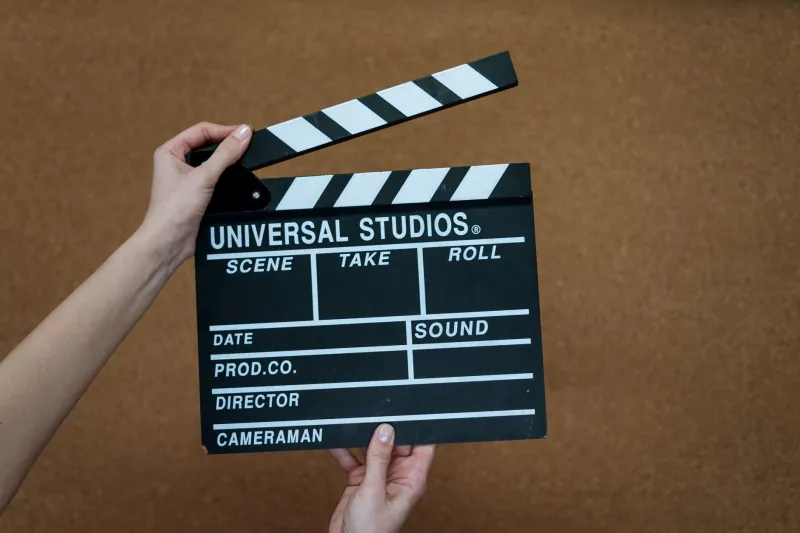
Photo by Photo by Joshua Hoehne on Unsplash on Unsplash
Somewhere in a sleek Los Angeles conference room, a very serious marketing executive is standing in front of a very expensive whiteboard. On that whiteboard, in bold dry-erase marker, are the words: "Announce the announcement of the announcement." Nobody in the room is laughing. This is, apparently, a strategy.
Welcome to the modern entertainment marketing cycle, where the content is no longer the movie, the show, or even the trailer. The content is the knowledge that something might exist eventually. Hollywood has essentially turned anticipation into a subscription service, and somehow — impossibly, hilariously — we all signed up.
The Blank Slate That Broke the Internet
It started innocently enough. A studio would drop a teaser for a teaser trailer. Mildly absurd, sure, but forgivable. Then came the teaser image — a logo, a date, a single uncontextualized symbol that could mean anything. Then the announcement that a teaser image was coming. Then, naturally, the social media countdown to that announcement.
Now we've arrived at peak meta: the official press release informing journalists — and by extension, all of us — that a major studio will be making a significant announcement at a future date to be determined. No details. No hints. Just the solemn promise that information is coming, and you should probably be very excited about that information, even though you have no idea what it is.
This is, to be absolutely clear, the entertainment industry announcing that it has not yet announced anything. And it works. Every single time.
Hype as a Standalone Product
Here's the part that should make us all sit quietly with our thoughts for a moment: the pre-announcement announcement is not a bug in the Hollywood marketing machine. It is very much the feature.
Studios have figured out that modern audiences don't just consume content — they consume the experience of waiting for content. The speculation, the fan theories, the Reddit threads dissecting a blurry image of what might be a logo — that's all engagement. That's all free marketing. Every confused tweet asking "Wait, what is this?" is an algorithm-feeding gift to the studio's social media team.
In economic terms, they've monetized the placeholder. Which, honestly, feels extremely on-brand for an era in which a jpeg of a rock sold for $69 million and people stood in line for sneakers that hadn't been designed yet.
NoWebsiteYet, as a concept, exists precisely in this space — the domain is registered, the name is intriguing, something is clearly coming. But the something? Still pending. Hollywood looked at that energy and said: yes, bottle that, sell it indefinitely.
The Anatomy of a Non-Announcement
For those unfamiliar with how this cycle actually plays out, here is your field guide:
Phase One: The Cryptic Social Post. An official account for a dormant franchise posts a single period. Or a color swatch. Or the phrase "It's time." Time for what? Nobody knows. That's the point. Engagement explodes.
Phase Two: The Trade Coverage. Deadline, Variety, and The Hollywood Reporter run pieces with headlines like "[Studio] Teases Mysterious Project, Fans Speculate Wildly." The article contains zero additional information but does include three paragraphs of fan reaction quotes from Twitter.
Phase Three: The Confirmation That a Confirmation Is Coming. A studio rep tells a journalist, off the record, that there will be "news soon." This becomes its own news cycle. The phrase "sources close to the production" does a lot of heavy lifting here.
Phase Four: The Actual Announcement. A logo. A date. Maybe a tagline. If you're lucky, a title. The internet treats this with the energy typically reserved for moon landings.
Phase Five: The Announcement of the Next Announcement. The first trailer, we're told, is coming. Date TBD. Begin again.
Why We Keep Showing Up
The cynical read is that we're all being played — that audiences have become willing participants in an escalating game of corporate-manufactured suspense, trained like very enthusiastic Pavlovian dogs to salivate at the sound of a studio's Instagram notification.
The more generous read — and honestly, the more accurate one — is that anticipation is genuinely fun. Humans are wired for it. The waiting, the wondering, the communal experience of not-knowing-together: that's a real thing with real emotional value. A movie you've been excited about for two years hits differently than one you discovered on a Tuesday afternoon while scrolling through a streaming menu.
Hollywood didn't invent the joy of anticipation. They just industrialized it, optimized it, and figured out how to start the clock earlier and earlier until the clock itself became the attraction.
There's also a parasocial dimension worth naming. When you're invested in the announcement of something, you're invested in the story of something being made. You become a stakeholder in the production narrative before a single frame is shot. That's a remarkably powerful form of audience capture, and studios know it.
The Diminishing Returns Problem
Of course, there's a ceiling somewhere. The pre-announcement announcement only works if the eventual announcement — and then the eventual content — actually delivers. When it doesn't, the backlash is proportionally savage. The higher the manufactured hype, the harder the landing when the thing turns out to be, say, a mid-budget sequel nobody asked for with a runtime of two hours and twenty minutes that somehow still feels rushed.
There's also the fatigue factor. When every project announces its announcement, the strategy loses its distinctiveness. We're approaching a moment — if we haven't already arrived — where a cryptic black-screen social post generates less "What could this BE?" and more "Okay, which one is this."
The arms race of anticipation has a logical endpoint, and that endpoint is a press release announcing that a press release is being drafted about an upcoming press release. At which point, we will all simply nod, add it to our calendars, and wait.
Something Is Coming. Just Not Yet.
Maybe the real takeaway is that Hollywood and the internet deserve each other completely. One side has an endless appetite for content about content about content. The other has an endless appetite for engagement that costs nothing to generate. The pre-announcement announcement is the perfect product for this moment: it's free to produce, impossible to spoil, and generates the same dopamine loop as actual news without requiring anyone to have actually made anything yet.
In a way, it's the most honest thing the industry has ever done. They're not pretending to have a finished film. They're just letting you know that at some point, there will be information about a thing.
Consider yourself informed.
We'll have more details soon.